
 EN
Blog
One TPU Spool, Different Hardness Zones: How to Print a Shoe Sole
A running shoe sole needs a soft forefoot, a supportive arch and a stable heel. With 3D printing you tune those zones by structure instead of by swapping materials. This guide covers infill density, infill patterns, per-zone settings and the material properties that decide how the part behaves over time.
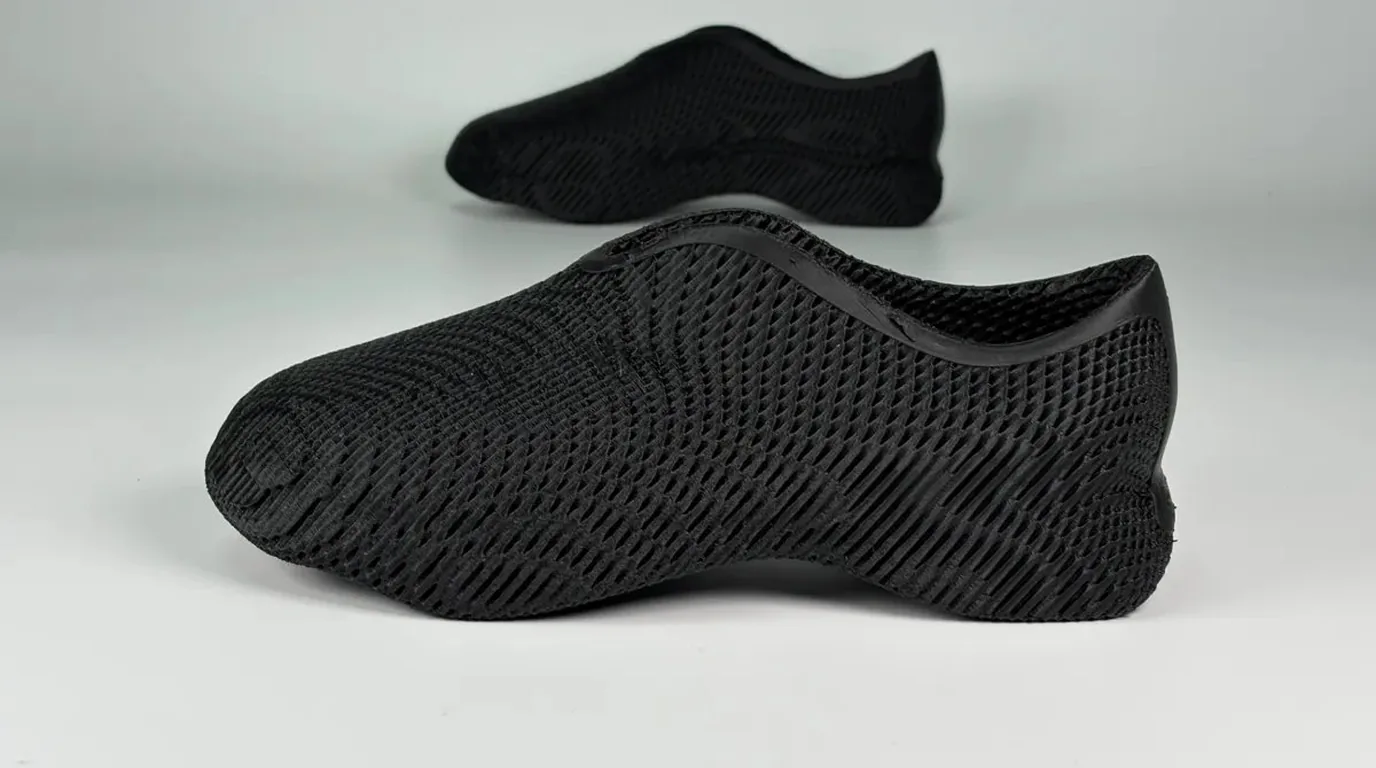
One sole, three different jobs
Step on a running shoe and the forefoot has to flex, the arch has to hold its shape and the heel must not collapse under impact. Those three zones are not asking for the same function. Traditionally each zone was built from a different material: foam blocks of different density and hardness, cut, bonded and pressed together, or assembled from separate parts. It works, but every extra part means extra tooling, extra bonding steps and more complex quality control.
3D printing removes those steps. You stay on a single spool of TPU and let the internal structure do the tuning.
Does raising infill to 40% make the sole harder?
Open the slicing software and the infill panel has several parameters. The one used most is infill density, which sets how much of the interior volume is solid material.
Print the same sole at 15% and at 40% and the difference underfoot is obvious. At low density the part contains many internal voids, deflects more and feels soft. At high density the internal structure is tight, effective stiffness rises and the sole feels supportive.
The second parameter is infill pattern, which decides the shape the material takes inside the part. At the same 20% density, linear, grid and gyroid behave very differently under load.
Foot pressure does not come from one direction either. On impact there is vertical compression, but there is also forward shear and pull.
How the main infill patterns differ
Linear infill runs material back and forth in one direction. Pressed along the line direction it is reasonably stiff; pressed perpendicular to it, it gives easily. Because the load direction across a sole keeps changing, linear is rarely the right choice.
Grid infill crosses in both directions, so both axes are supported and adjacent layers are offset in angle. It is stiffer than linear, though the layer bonding points are somewhat weaker.
Honeycomb infill performs well within the horizontal plane, uses less material and prints fast. It is weaker in the vertical direction, so it handles top-down compression well but not lateral load.
Gyroid infill has become the standard for flexible parts in recent years. It is a single continuous surface with material distributed in all three directions, so there is no obvious weak axis. That makes it a good match for loads that shift direction often and frequently, and it also deforms evenly.
Concentric infill follows the contour inwards ring by ring, so the infill lines run along the shape and the printed part deforms with it. It is a common choice when a softer result is wanted.
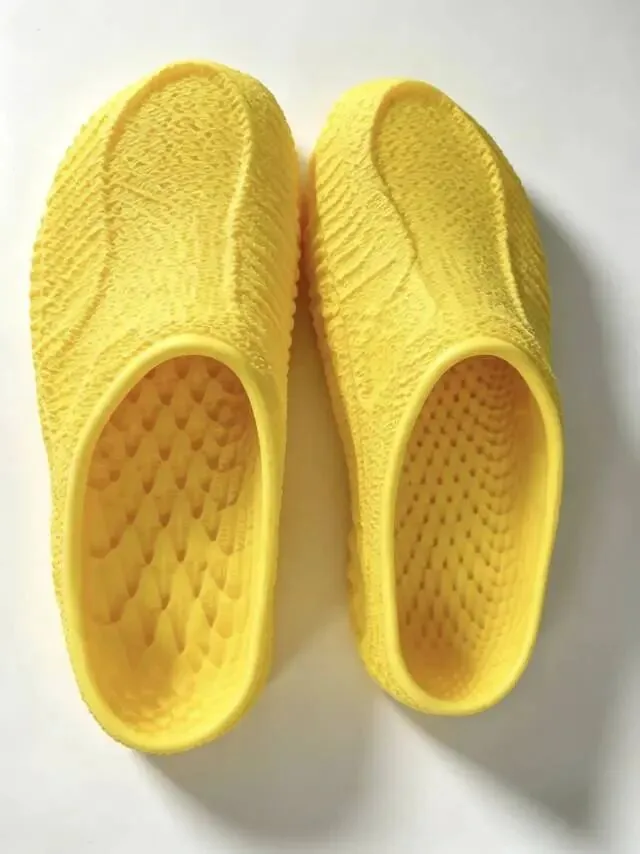
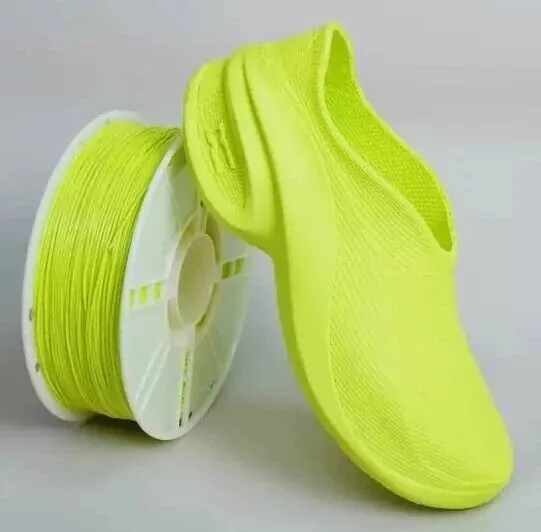
Different settings for different zones of the sole
Current slicing software supports different parameters in different regions of the same part. Set the arch to 60% gyroid to hold its shape, drop the forefoot to 20% so it flexes, and use a 30% to 40% transition at the heel where both shock absorption and rebound matter. All three zones print in one go from the same spool.
Printing them as one part also removes the glue line. With bonded assemblies, most failures start at the adhesive layer: delamination and separation both begin there.
Wall loops can be adjusted as well. More loops give a stiffer outer surface; dropping to one or two loops lets the whole part deform more easily, which is common practice for flexible parts.
Layer height, the number of solid top and bottom layers, and the overlap between infill and walls all shift the feel in different directions. Tune them together rather than one at a time.
Once the structure is set, the material decides the rest
Structure controls effective stiffness, the compression curve and the deformation mode. Several other properties come from the material itself.
Elastic recovery comes from the polymer chain. TPU contains soft and hard segments. When the soft segments are stretched they tend to return to a coiled state, which is entropic elasticity, while the hard segments form physical crosslinks that anchor the chains so the deformation can recover. Infill tuning works on top of that behaviour.
Tear strength follows the same logic. Infill structures use thin struts, so stress concentrates where the struts meet. Only if the material has enough tear strength will cracks stay from opening there.
Compression set describes whether the part returns to its original thickness after repeated loading. How long a sole keeps its softness depends mainly on this property, and structure cannot compensate for it.
The outsole takes daily abrasion, so wear resistance is also a material property. Inside the shoe the environment is warm and damp and sweat stays on the part for long periods, so polyether-based grades have more margin on hydrolysis resistance; where antimicrobial performance is required, antimicrobial grades are available.
Finally, check how stable the filament diameter is
Infill is calculated by volume. To work out how much material to extrude for a layer, the slicer uses the filament diameter. A nominal 1.75 mm filament may actually fluctuate between 1.7 and 1.8 mm, which changes the extruded volume and makes the real infill density differ from the value you set.
The result is that the same model with the same settings produces soles that vary from soft to hard between batches. When troubleshooting, most people blame the machine or the settings first and only find the filament diameter at the end.
This is why diameter tolerance matters more for flexible parts than for rigid filament.
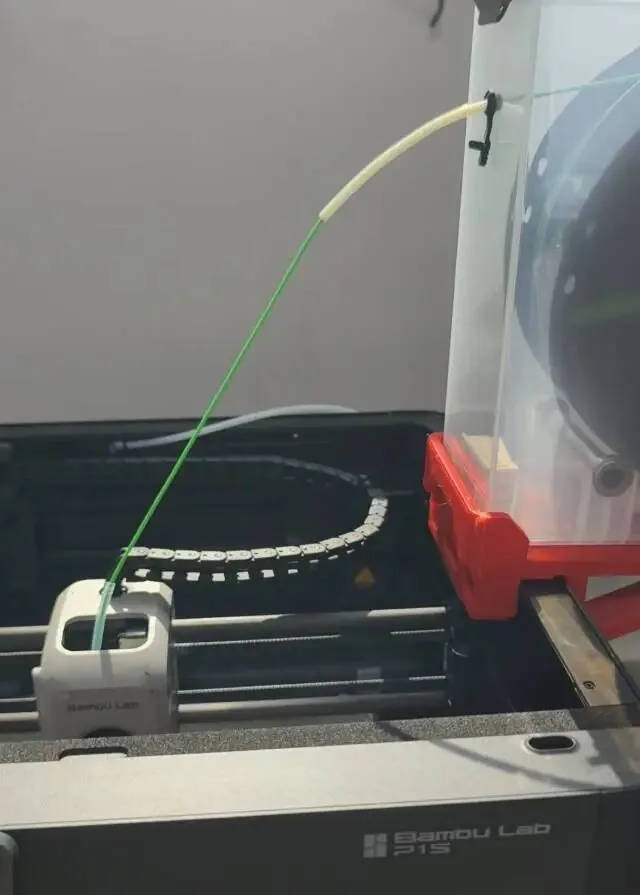
There are also a few points to keep in mind while printing. TPU is hygroscopic, so dry the filament first or layers will string together. Soft filament demands a stable feed path, so a direct-drive extruder gives more consistent results. Slow the print speed down to give the melt enough time to plasticize and bond. Retraction needs its own settings, because parameters tuned for rigid filament will deform soft filament instead of retracting it cleanly.